I went into Counter Craft JS expecting a fairly standard shooting experience and came out having spent far more time with it than I had any right to. That sentence could describe a lot of the games I write about, but it's particularly true of this one. Counter Craft JS does something that a lot of games in this space fail to do: it commits fully to its concept, executes that concept with care, and trusts the player to engage with it on its own terms. The result is a game that feels distinctive even within an increasingly crowded field of browser-based releases.
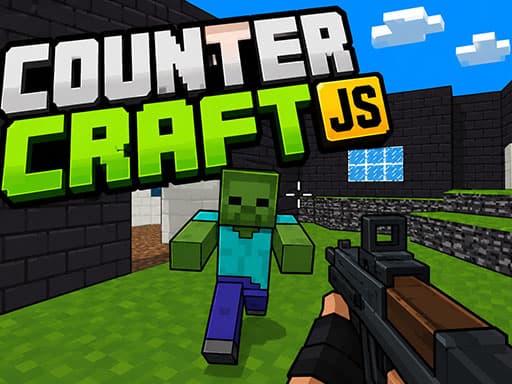
The premise, as far as premises go, is straightforward. Engage in brilliantly designed tactical battles where lightning-quick reflexes and precise, controlled shooting absolutely define the difference between victory and defeat in Counter Craft JS - the browser-based first-person shooter that delivers a surprisingly deep and authentic tactical combat experience without requiring any downloads or installations whatsoever! Navigate dynamic, intricately designed combat maps using the standard FPS control scheme that feels immediately familiar to any fan of the genre, moving strategically from cover to cover while carefully managing your limited ammunition supply to ensure you always have enough firepower when the most critical moments of each firefight arrive. The core combat mechanic brilliantly blends authentic first-person shooter action with light crafting elements that add a completely unique strategic dimension to the familiar formula - between engagements and during calm moments, gather materials from the environment to craft improved equipment, customize your loadout, and build makeshift defensive positions that give you tactical advantages in subsequent encounters. The blocky, Minecraft-inspired visual aesthetic gives the game a distinctive and charming visual identity that manages to be both nostalgic and fresh simultaneously, while the detailed environmental design ensures that every map offers multiple viable tactical approaches and interesting sightlines that reward players who take the time to learn the terrain. That's the elevator pitch, and it's accurate, but it undersells how the game feels in actual play. Counter Craft JS has a way of sneaking up on you with small details and thoughtful design choices that add up to something more substantial than the description suggests. The first few minutes of my session felt like I was playing a perfectly fine, perfectly forgettable casual game. By the time I looked up from my screen, an hour had passed and I had been thinking tactically about decisions I didn't even realize I was making.
The core gameplay loop is where Counter Craft JS earns its reputation. The shooting is weighty and responsive, with the kind of feedback that makes every successful engagement feel earned. The weapons have appropriate character, the enemies are smart enough to require real tactical thinking, and the difficulty curve is well-tuned to teach you mechanics before demanding mastery. The building and management mechanics are where the game reveals its depth. There's a real satisfaction in taking a system apart, understanding how the pieces fit together, and then putting them back in a more efficient configuration. Whatever your tolerance for casual games, the moment-to-moment experience here is satisfying enough to keep you engaged even during sessions that go longer than you originally planned.
Progression And Replay Value
One of the things that kept me coming back to Counter Craft JS was the progression system. There's a steady stream of unlockables that gives you a constant sense of forward motion - new weapons, new vehicles, new characters, new abilities, depending on what the game is about. The upgrade system is satisfying without being grindy, and you can see clear, meaningful improvements from each investment, which makes the time you spend feel worthwhile. Replay value is one of the most important qualities in a casual game, and Counter Craft JS handles it well. The base content is engaging enough to justify your initial time investment, and the meta-game gives you reasons to keep coming back.
Visuals And Audio
The presentation is strong. The art direction has a clear sense of identity, the character designs are memorable, the environments are varied and interesting, and the overall polish is higher than you might expect for a browser release. The audio is similarly well-done - the music sets the right tone, the sound effects are punchy and satisfying, and the overall mix doesn't fatigue the ears even during extended play sessions. The little details, from the way a button click animates to the way a successful action is celebrated with a brief visual flourish, add up to an experience that feels considered rather than thrown together.
What Works, What Doesn't
After extended time with Counter Craft JS, here's my honest assessment. The strengths are clear: the game has a strong core concept that it executes well, the difficulty is well-tuned, the progression is satisfying, and the overall polish is higher than you might expect. There are a few small weaknesses worth mentioning. The UI can be a little cluttered in places, the early game does take a few minutes to find its rhythm, and some of the later content can feel a touch repetitive if you're playing marathon sessions. None of these are deal-breakers - they're observations about a game that gets the important things right.
Final Verdict
So is Counter Craft JS worth your time? If you have even a passing interest in shooting games, yes. The game is well-made, the mechanics are satisfying, and the experience is more substantial than its casual presentation suggests. It's not going to change your life, but it's the kind of game that makes you glad you tried it. I went in with modest expectations and came out a fan, which is about the highest compliment I can give a game in this genre.
If you've played Counter Craft JS, I'd love to hear what you think. If you haven't, this might be the nudge you needed to give it a try.
Gallery